Where am I

Mostrando entradas con la etiqueta nature. Mostrar todas las entradas

miércoles, 28 de septiembre de 2011

Bikeriding on Ometepe Island

To keep myself active when I came back to sleep in Hostel Central in Moyogalpa (or Indio Viejo), I rented a bike one day to explore the island. You can rent one from the "old indian" himself for $6 a day, or from others for $5. You always have to check the brakes, or else you may get a nasty surprise. The day wI decided to do so I met Scot from UK who was also after a bike for the day. I decided to bike to Balgue on the other side of the island, and stop a few places on the way. The first stop was at Punta Jesus Maria, the locals call the Whales back because there is a small strip of land going out into the lake, however the lake is now so full of water that it was not possible to see the strip of land called the Whales back. The picture above is a picture of the road down there. It is 1 /2 km. from the main road. The picture below is as far as I got.

The picture below is from Laguna Chaco Verde, and it is also a bit away from the main road. it is possible also to sleep in a hotel near this lagoon, called Chaco Verde. By the entrance to Chaco Verde, the main road (from Moyogalpa on the Conception part of the island, to Altagracia on the Maderas side, the only paved road on the island) start to go up hill, so you might want to either take the bus to the junction that connects the two parts of the island, or you can stop and take a refreshing bath here before continuing, under an unmerciful sun, to take a bath. It is really quiet and beautiful, no people around when I was there, and you can see /hear howler monkeys and see both Conception and Maderas from there. The water is clear and refreshing. m o this was my 2nd stop on the way to Balgue, some 20 or more km. from Moyogalpa (for the record, I do not know how far it is, but when I came back i  was told that I had been bkiking more than 40 km. (not including my stops)). The 2 pictures below are from the lagoon Chaco Verde.


From Chaco Verde I had a really hard time getting up several km. up hill with my bike. I had to get up and walk some. The sun makes it really hard since there are no trees to give any shade. It is not a steep hill, but it
is hard (on the way back it is fun though!). After climbing all those km. the road went slightly down hill toward the junction where I would take off towards Balgue. Right after the junction there is a very steep down hill, and at the bottom is the entrance for Ojo de Agua, a source of water that is, thought by the natives, to be healing water. I went past it because the hill was steep and I had good speed on my bike. I was really grateful that it is hardly any traffic on the island, because the roads are small and narrow. I went on to Balgue, the road was a bit easier, until you get to the unpaved road part. The Maderas side of the island is less developed than the Conception side, so the roads are awful and bumpy, and the only reason why buses take forever to travel a few km. I stopped to drink a juice in Balgue and started back, determined to stop at Ojo de Agua on the way back. I was tired when I came there because I had to bike up hill a lot, so it was just beautiful to lie down in the rather cold water. Ojo de Agua (eye of water) is caused by rainwater that was stuck underground in the soft volcanic sediments being pressed up again to the surface. During the rainy season the water seeps down in the hollows in the rocky ground and in the end there is too much water, so it presses up again where it can find a way out, and it makes the pool on the pictures (below), and a river running in to the lake from it. Because it has been trapped before inside volcanic ground full of minerals, the water is crystal clear and sparkling clean, and full of minerals. That is why it is healing water, and it is said that a bath in the water makes you 5 years younger. So while I was there, I jumped in 3 times, and I made jokes to a man and a woman I met that I am 15 years younger, since I jumped in 3 times. I ate some food by the pool, and swam in it in between. It is not very deep, and compared to Lake Nicaragua, the water is very cold, but in the heat you will appreciate it. After almost 2 hours, I considered going back because it gets dark so early, and even if there is little traffic, I did not want to bike in the dark. To get back was first very, very hard. I was tired from all the up hill climbing that I had done, and I am not a champion on bike. When the up hills started by Chaco Verde, Scot left me (he was on a day trip to the island, and was going to go back to the mainland on the 17:00 boat), and I met him on the way back when I was nearing Balgue, we said goodbye and he went back before me. I had my battle with all the up hill until I came to the point where it all went down for several km., and it was tons of fun. Just sitting on the bike, not having to nothing was a blessing, my princess ass was hurting from an uncomfortable seat, so I was in heaven for a while. After all the down hill, I joined locals, that travel by bike all the time here, but have all the time in the world biking lazily away. I, also, biked lazily away. After something that seems like forever with my sore ass, I finally got back home. The 2 pictures below are from Ojo de Agua.

I managed to stay on Isla de Ometepe for 2 weeks. It was difficult to leave, and more than one person said; the island does that to you! And now it is experiencing its 3rd. invasion. The 1st. invasion was the aztec invasion, the 2nd. the conquistadors from Spain, and the 3rd is the Europeans and the USA. On this small island, the foreign population is growing. I met many, f.ex. one young couple from UK running the Cornerhouse Cafe. They make the most delicious Eggs Benedict you can find in the whole wide world! And the cold latte and carrot cake is also to die for. I made the place my regular place the week I spend in Moyogalpa, sitting there whole days sometimes to catch up on my blog, eating breakfast (Egg Benedict) together with one of the refreshing smoothies with starfruit or passion fruit together with mango and papaya, mango and banana, or banana and papaya, or some other fruits. Then have a iced latte and a carrot cake or an organic vegetarian sandwich. I met other Europeans and people from US in the cafe who either lived there or had just bought a property there. The reason to leave their countries where very interesting, so I had some very meaningful conversations with some of them. In general they do not have a "mainstream" philosophy of life. The locals on the island are so beautiful that I could almost cry looking at them. But I guess it is easy to be beautiful when you live a stress free, simple life and have clean air and surrounded by green nature and animals. Me and Rei-Han (from Taipei) had a conversation about that, and she said that the people are so beautiful because they are so pure in their hearts. She also said something interesting about happiness that gave me an idea, because I want to do a blog about happiness, so I have been thinking for a while about how to dig deeper into the theme. What I have noticed is that people in general seem happy in Central-America, not for lack of suffering, but maybe because of it, they take every moment as a chance of happiness. A friend said that they can not waste the time on unhappiness because they never know what will happen to them, and they live in countries with violence. What is happiness to them, is not the same as happiness is for us in the safe privileged world, but it works in the same way.I have long ago figured out that the way to true happiness is to grateful. And I am truly grateful for meeting all the people I have met, and to have come here to learn.

sábado, 17 de septiembre de 2011

Tree houses

I stayed in Granada for 5 days to get money, to do some writing and to my big joy and surprise I was able to buy contact lenses (in guidebooks (and tourists said so as well) they claim that it is impossible to get that in Nicaragua, but I orded them in the evening, and I could pick them up the morning after, and they did not cost more than in Norway (I throught they might be a little cheaper, but no)). I had a problem with one eye for one day, I suppose because I had been using lenses a few days longer than I should, afraid that I would never be able to find them here in Central-America. When I left Granada I left with a guy named Freddy, in a jeep, with 4 other tourists. We were heading to their treehouse in the forest of Posto Rojo.
http://www.tripadvisor.com/LocationPhotos-g580113-d1957230-w2-Treehouse_Poste_Rojo-Granada.html
Music that I heard in Posto Rojo.


http://nowthatsnifty.blogspot.com/2009/07/amazing-and-awesome-tree-houses.html

http://www.treehouses.com/
Who would not want to live in a tree house after seeing theese to WebSites?
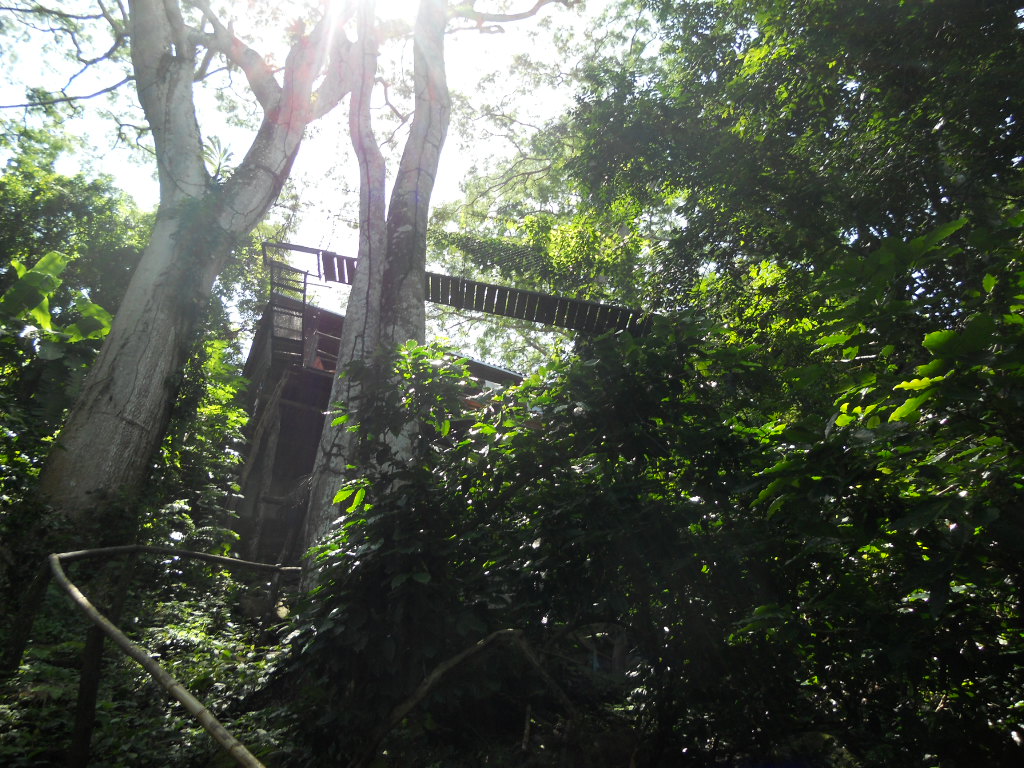
There is something about a tree house that appeals to a lot of people's childhood fantasies of independence and freedom. I never had a tree house when I grew up, and when I came to Freddys tree house in Posto Rojo, just 20 min., out in the forest, from Granada (we saw a howler monkey right after we got there, feeding in the trees right next to the main house), I became quite facinated by the idea of LIVING in one. Freddy have 2 books on tree houses lying in the main structure for people to have a look if they like, and I was intrigued by how many designes there are. The books contain a detailed recepie of how to construct a tree house either in one or in 2 trees, and also what kind of trees that are most fit for tree houses. Of cource it is essential to pick the right tree, unless you want to live in danger of falling down.There are also surprisingly many tree houses in the world, and many of them serve as luxury hotels. Even though there are plenty of examples of people living most of their lives in tree houses, unfortunatley, todays obsession about safety, and laws and rules, have made it difficult for people to make tree houses their permanent home. A lot of the tree houses I saw and read about in the book where fully equipped with bathrooms and showers and a pumping system to get the wather up, and they all have a facinating architecture that inspire my sense of adventure and imagination. Many people have buildt their own tree house cabin or summerhouse, but there are many tree house architects. In some countries there are people living in tree houses either as a luxury, to save the environment or as a tradition. People that live in trees as a lifestyle are tree dwellers, you can find tree dwellers in Indonesia at the Brazza River Basin, and the Korowai tribe in Papua New Guinea that lives 50 m. (more or less) up with only a ladder and /or a notched pole to access the house. and I visisted in Brasil people with their homes on stilts and near trees with wooden bridges between the different stuctures. When the Europeans first came to this continent they found that many islanders were tree dwellers with a simple platform structures in the tops of the trees.

Freddys tree house hostel. It is simply called Tree House Hostel. Upstairs there is a kitchen, all the wather is still carried up by handforce.

Not surprizingly, to me anyway, studies and research in USA and Japan have showed that living in trees and near trees makes people happier. People preforme better on tests and form happier relationships when they live in an area with a lot of trees. According to Illinois University leafy streets also encourage a lower crime rate and a more "civilised" atmosphere, even in poor areas, researchers found this to be true. They believe that living close to parks and other green spaces is "essential to our physical, psychological and social well-being. Nature calms people and it also helps them psychologically rejuvenate. They are better able to handle challenges. Level of health could be predicted by the amount of green space within a mile of radius. In Chicago they found that trees can cut the level of crime by 7 %, and that children with ADHD were calmer and more focused after walking among trees, compared to children that are exercised indoors. In addition researchers in Japan also found that old people live longer if they have access to green area near their homes.


At the end of this blog there are some videos of amazing homes. Already people live in floating homes and floating cities. Who knows what the future have in store when it comes to ways of living. We only hope that a new way of living will be genteler to the nature and ourselves. That we will in the end live in harmony with our planet Earth, not fighting her. And that new ways of living will bring more happiness and love into a community.There is also even possibility of living inside live material.
House boat community; http://dornob.com/picture-this-seattle-houseboat-floating-home-photos/


links;
http://www.costaricatreehouse.net/
I love this green home, a "hobbit house";  http://dornob.com/straw-sticks-secrets-a-hand-built-earthen-hobbit-home/

jueves, 25 de agosto de 2011

Staying with Dona Lucia and Don Rogelio

The next day Nelson picked me up 08:30 after I had had a nice, and very henavy breakfast with Rosario and Dennis (the son). Nelson had brought to horses, and I was going to ride a lightgrey stallion called Thunder to the next family in El Sontule in the zona alta (highlands) of Miraflor. I had asked beforehand to do a homestay with Dona Lucia and Don Rogelio because of Lucias knowledge of herbal medisine. We rode through some awsome nature, soon climbing up the dirtroad where I had a breathtakeing overview over the magnificent mountains, hills and the valleys between them. All of it gleaming with different shades of green. The landscape changed a lot; from large open grasslands dottet with huge stones, that seemed to have been tossed around by an angry child, and big akasiatrees with their beautiful canopy. There were also other kinds of trees overgrown by bromelias, orchids and and a type of moss they call "old mans beard", they had this ghostly yet dignified look. As we rode on the landscape changed again to thick forrest, and we had to get across a river that had grown huge from the big downpour of rain the day before. Water was cascading down the hillside fastrunning, covering a good piece of road. I urged the horse to cross, and he did so easily in spite of the strong current, on the other side we galloped a short distance before again climbing up a hill. We took off from the main"road", where a bus struggle up and down the dirtroad once or twice a day, depending on how much road is left. Sometimes it might not even come, to ride up into an enchanted forrest of huge trees, all covered in moss and parasitic plants like bromelia, stranger figs and orchid . I had to make a comment about how it is to ride through a Harry Potter forrest. We climed up with the horses through the magical forrest listening for ghosts, pixies, fairies and lost spirits.The forrest has its share of legnends and stories. When the war was forcing people into hiding, some families came up here hiding in caves and in the forrest. Apart from a little bit of conversation everything was quiet, and I was sorry when we came down to Lucias and Rogelios house. Nelson left me there so that I could eat, and rest a bit before Lucia took me to her gardens to show me their organic veggies and herbs. We took in a few veggies and quite a few herbs to make tee. Lucia explained to me how she makes cheese (they make a very salty cheese here in Nacaragua) and how she makes corn flour. Then we cooked dinner together and had a nice conversation. Lucia and Rogelio have 20 cows, many chickens and hens running around, 3 pigs, 2 dogs and a cat. They get their water from a well with a pumping mecanism near the house. The whole community comes to this well to get water. They grow organic beans, coffee and maiz (corn) to sell, and have their small veggie and herb garden.
The next day I was picked up by Uriel, a nice young man to walk to La Perla where I was going to stay in a Posada (guesthouse). No need to say that 2 hour walk was equally beautiful as the trip the day before! After exploring La Perla I took the early bus out the day after. The busride took me through amazing landscapes in the ever changeing Segovia region. Higly recomended adventure!


                                            Vibrant green and muddy after heavy rain.
      Theese old trees are stoically enduring parasite attacs from strangler fig, bromelia, orchids and moss.
                                                 (under and above)

                                           The main road.

My sturdy steed.
.

                                          One of the caves in the magic forrest

miércoles, 17 de agosto de 2011

Architecture and thoughts on stillness (within stillness)

Since I left Guatemala it has been so quiet. I immediatley felt the stillness, and tranquilety of the people and the nature. In Mexico and Guatemala there are constant cars with speakers driving around in towns and cities announcing products and events and /or the loud roars of busses and trucks. People shouting "sickletts" in the street. There is always music blasting out from some stores, cafes and resturants. Sometimes very aggressive music and high volume. And some places seem rather caotic and very crowded. I noticed the distinct difference the first time by the lake Yojoa where it is quiet enough to not disturbe the appreciation of the nature both visualy and sonically. But I also noticed it on a more unconcsious level in Copan. I feel that my eyes have been resting on harmonious green, and my ears have been resting in tranquility. My heart and soul feel rested as well by the uninterruptedness of green hills and mountains. By less traffic and crowdedness. This is how I feel about Honduras and Nicaragua. The only real noice are the occational thunderstorms, but they also have their moments of perfect stillness between thunders that makes the very earth quiver underneath my body when I rest. Then the sky opens up, and an amazing amount of water crashes down from it and tears apart the stillness. I almost feel sorry for the thunderstorms in my part of the world. But to me it is stillness as well. It softens and quiets me. And I understand how people can be carefree and relaxed here. Never in a hurry. This is how it feels to understand what Eckart Tolle is REALLY talking about. I am good at living in the moment when I travel, that is why I love it so much. You HAVE to live in the moment, because traveling alone, as a woman, there are SO many things that are outside your control, and no-one will take responsibility for you, even laws will not protect you in the way we are led to believe that they protect us in our part of the world. If something happens to you here, it is basically your own problem. It is the law of the jungle. The duality of beauty and ugliness. Kali in action. This is how the reality of life is. Utter freedom, with the responsibility of beeing smart and healthy enough to handle life at its rawest. Theese countries have seen enough suffering and sivil war for the people to develope an inner souce of recource and self-precervation that is impressive to me. This freedom is what I can not find in Norway where too many rules saves us from ourselves and other potential maniacs. Where the safetynets are everywhere in the form of regulations. As much as a would NOT like to die in a busaccident because of lack of follwoing up regulations and the law, it provides me with the interesting concept of HAVING TO live in the moment. And accept that this is how it is done here, and so everybody has to live to the fullest every day, and see their family as often as possible, because death might be waiting around the corner. And the only thing that makes people safe and fearless here is faith. Faith comes from within. It can not be given to you, neither can safety nor fearlessness be given to you.

                                Lake Yojoa
                               
                                Los Naranjas
This is the Catedral de la Immaculada Conception, the national pride of Honduras. It is in the old colonial city Comayagua, in Comayagua department in Honduras. It was built between 1685 and 1715 in renaissance, neo-classic and baroque styles inside and outside. This kind of buildings, toghether with big pyramids and impressive ruins makes me realize how much a love and adore architecture. Especially the heavy, goth, renaissance, neo-classic, baroque and ancient architecture. When a building has Moorish domes, coloured glass in the windows, like the pics. further down, and is adorned with statues and carvings I appreciate so  much to look at it. I have come to love architecture more and more when I travel, and even though I have seen my share of churches in this part of the world, am I not really completely IN a city until I have been to the "Centro Historico" to sit in front of the cathedral to soak in the spirituality and faith that it symbolizes. Inside is the oldest clock in the world that is still working (as far as known), built in 1100 by the Moorish people, and given to Comayagua by King Philip II of Spain. Comayagua was the first capital of Honduras before the power shifted and Tegucigalpa (Tegus on the street) became capital in 1880. Comaygua is concidered the best place to go for festivals. There are, of course, national parks in the area.
                                             Arch in the park.
                                  Clock from 1100.
                                View from the tower of the churc.
                                 Moorish domes from outside, and from inside below.


To get to Comayagua: From the lake; bus to Guama and wait for a bus to Comayagua on the road. From the busstation at San Pedro Sula.  

lunes, 8 de agosto de 2011

Utila Cays and moving on

From Utila I went to a tiny island, or more like a giant flat stone in the ocean, called Pigeon Cay. I went there with Capitain Morgans diving schools boat out there to learn how to dive. The only way to get there is by boat, it takes about 20 min. from Utila. A tiny, tiny cay with less than a 100 houses clung together. It is so flat that just half a meter waterrise will cause flooding, and indeed all the houses are on stilts. I guess they are used to flooding during the rainyseason. The people on the cay live from fishing on the coral reefs, and are, in that sense, totally dependent on the health of the coral reefs that are teeming with interesting life; beautiful seacreatures. An underwaterworld of colours and varaity. I did not know if I wanted a diving license, and because of limited time after the robbery, I just did a day of discovery dive. In Utila there are several options for diving and snorkeling. I got to see a lot of underwater life anyway; rays, parrotfish, squids, small eels and snakes and a lot more. My big wish is to see the whaleshark, but I never saw one. Some day I will see them, and snorkle with them!

Since I am heading for Nicaragua it was time to move on after a few days as an islander. I took the passengerferry Utila Princess II at 06:20 in the morning, thinking that the sea would be calm at that time, like it was when I went to Utila. But in the line in front of me I heard people asking for seasickness pills, so I thought that maybe it would be a "bumby ride". Since I am not traveling by boat a lot, I am never sure how seasick I will be. I thought that they are Honduran landcrabs and maybe they just want to be sure that they did not get sick. The sea was really rough on the way to Ceiba, but I sat outside on the back of the boat. I am glad I did that, inside is just a big room for the passengers. The "capitan" and his co-workers are standing in the front, and it smells of oil and engine. The waves were big, but kind of gentle, so even though it would be hard walking around, I did not have the feeling that the boat was beeing tossed around. Sitting in the back I did not see much, just a narrow oceanview to were we came from. It was not possible to see what was going on in the front of the boat. I figured that was just as good, but I had confidence in the "capitan" and the ferry, I knew that if it is too rough the ferry would not leave the dock. Sitting here by Lago de Yojoa, I meet people, that just came from Utila, telling me about a lot of people getting so seasick that they were throwing up. I do not know if there was anyone throwing up when I did the trip, but I saw some people looking a bit pale. I was even more happy that I sat outside, even if I got splashed.

When I got back to La Ceiba I took a taxi (50 lempiras = 15-20 Nkr.) directly to the busstation where I bought a ticked with Diana Express to Tela. Tela is supposedly a very nice city, it is famous for its Carrebian beaches, but to me it was a bit waste to go there, I had had enough of beaches, and it was so hot and humid that I felt totally knoked out. There are two big national parks there to visit. But one thing about Honduras; it is difficult to travel alone. Not because it is difficult to get around, but everything gets more expencive, and not possible to do. All tours need a minimum of people, and Honduras is still an untouched and pristine country. It has not been taken over by mass tourism yet, there are national parks on every corner, and I have to say that naturewise Honduras is more green and beautiful than Guatemala. Traveling in Guatemala you see scars in the nature everywhere. It feels very populated and the nature is interruptet by buildings and villages everywhere, except in the national park of Peten. If you travel in Guatemala, thinking the nature is beautiful, and love it, you will LOVE Honduras. Now during the rainyseason it is so lush and green, and the hills and mountains are stunning. Going by boat out of La Ceiba you even see the slopes of the hills and mountains ending in the sea.


Pigeon Cay, part of Utila Cays by Utila Island outside Honduras. See map by clicking location under keywords.


Anyway, I spent 2 nights in Tela feeling like I was in a detoxprogram. And my skin is indeed softer. And in a bit of agony since I had been in the water and on boats so much on the cay that I was a bit sunburned. I left Tela for Lago de Yojoa, where I am sitting now at D&D bed and Breakfast and Brewery, 3 km from Peña Blanca. Here there are, of course, 3 eco /archeological /natureparks pluss the lake. The biggest body of water in Honduras. Yesterday I walked my feet of in the Eco Finca, a Eco-park with eco-coffeplantation, I saw a lot of birds (this is one of the places birdwatchers should visit), even tucans, and there are beautiful flowers, small creeks and rivers that I could have swam in, but I did not know.  I also visited a waterfall. More in the next blog.